Fallout: New Vegas Beginner's Guide: How to Get Started in the Mojave Wasteland
Starting Fallout: New Vegas for the first time can feel overwhelming. This beginner’s guide explains what to know about character builds, early exploration, factions, combat, companions, gear, and DLC before you head deeper into the Mojave Wasteland.
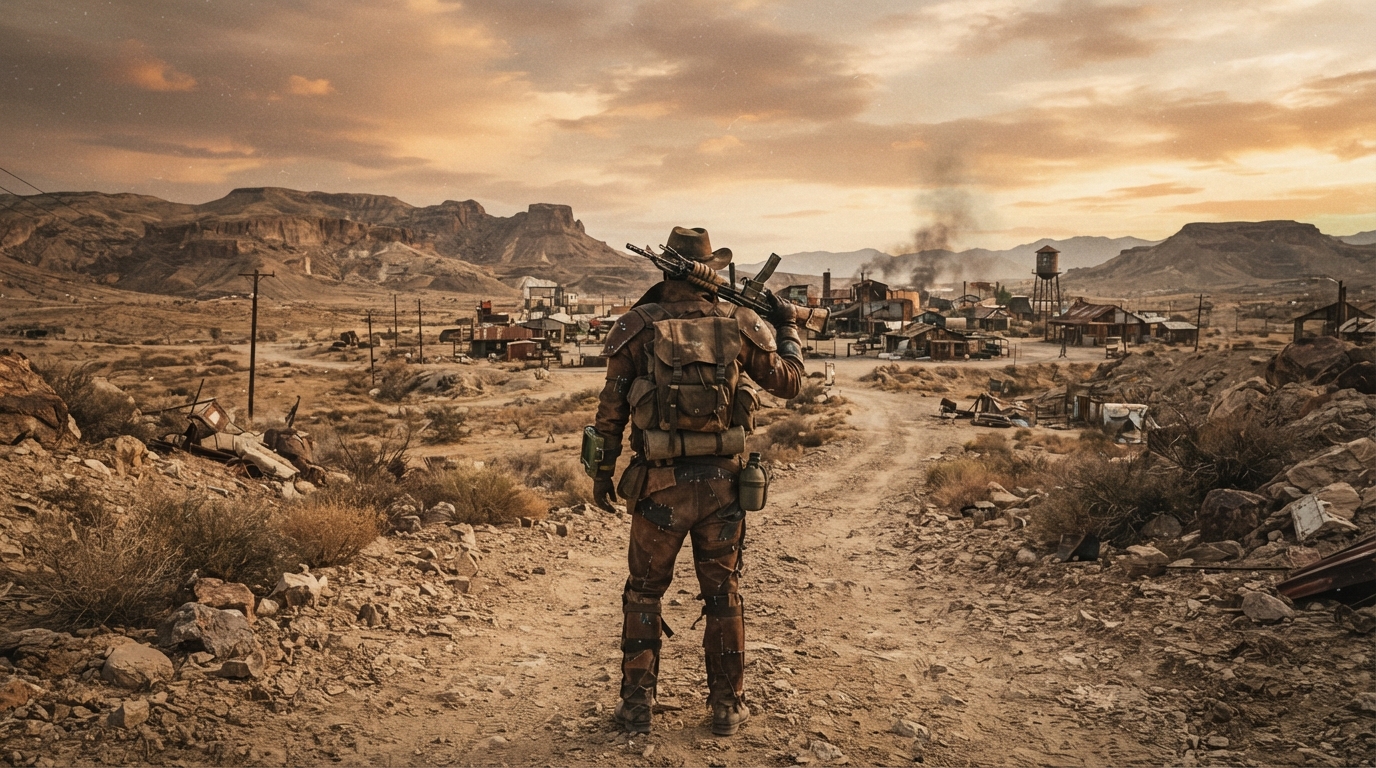
Fallout: New Vegas Beginner’s Guide: Tips for New Players
*Fallout: New Vegas* drops you into the Mojave Wasteland with very little certainty about what comes next. You play as the Courier, a delivery worker who survives an attempted murder and wakes up in Goodsprings. From there, the game gradually opens into a much larger conflict involving competing factions, dangerous creatures, settlements, and the mysterious New Vegas Strip.
Originally released by Obsidian Entertainment on October 19, 2010, *Fallout: New Vegas* is a single-player role-playing game built around exploration, character development, quests, dialogue, and player choice.
If you're starting the game for the first time, you don't need to understand every system immediately. A few basic decisions and habits will make your first trip through the Mojave much easier.
What Is Fallout: New Vegas?
*Fallout: New Vegas* is a single-player role-playing game set in the post-nuclear Mojave Wasteland. You explore the region, complete quests, meet settlements and characters, fight enemies, collect equipment, and make decisions that can influence how different groups react to you.
The central story begins after the Courier is attacked while carrying a mysterious package. After recovering in Goodsprings, the Courier starts following the trail of the people responsible.
The important thing to understand is that there isn't only one way to approach the game. Your character can specialize in combat, dialogue, exploration, stealth, or a mixture of different skills. Your decisions can also affect relationships with the factions competing for control of the Mojave.
That freedom is one of the biggest reasons to avoid rushing through the main story.
Take Your Time With Character Creation
At the beginning of *Fallout: New Vegas*, you'll make decisions about your character's SPECIAL attributes, skills, traits, and eventually perks.
SPECIAL represents seven core attributes:
- Strength
- Perception
- Endurance
- Charisma
- Intelligence
- Agility
- Luck
These attributes influence different parts of your character's capabilities. Your skills then allow you to specialize further.
For a first playthrough, don't worry about creating a mathematically perfect character. A balanced character can be much easier to learn with than a highly specialized build that assumes you already understand the game's systems.
Think about how you actually want to play.
If you like talking your way through situations, invest in relevant dialogue-oriented skills. If you prefer shooting, prioritize the skills and attributes that support your preferred weapons. If you want to experiment with different solutions, keep your character reasonably flexible.
The game gives you opportunities to develop your character as you progress, so your first decisions don't need to be perfect.
Don't Rush Out of Goodsprings
Goodsprings is effectively your introduction to the Mojave.
It can be tempting to leave as quickly as possible and head toward the bright lights of New Vegas, but spending some time around the early settlements is useful. You'll learn how quests work, experiment with combat, acquire equipment, and begin seeing how different characters and groups respond to your choices.
The opening area also teaches an important lesson about *New Vegas*: quests don't always have one obvious solution.
Pay attention to conversations. Talk to characters before assuming a quest requires combat. Explore your available dialogue options and consider what your character would realistically know or do.
Your decisions in the early game can also affect your relationship with different groups, so it's worth learning how reputation and faction relationships work before making major choices.
Learn How Factions Work
Factions are one of the most important parts of *Fallout: New Vegas*.
The Mojave is contested by several groups, with the New California Republic and Caesar's Legion among the major powers. Mr. House also has his own plans for New Vegas, while an independent route can eventually give the Courier another way to approach the conflict.
You don't need to choose a side immediately.
In fact, one of the best habits for a new player is to listen before committing.
Complete some quests. Meet different characters. Learn what each faction wants. Then decide which direction makes sense for your character.
Also remember that actions can have consequences. Helping one faction may make another faction less friendly toward you. Some decisions can eventually close off certain options.
If you're unsure about a major decision, save your game first.
Save Often
This sounds obvious, but it is particularly useful in *Fallout: New Vegas*.
Keep multiple saves rather than relying entirely on one autosave.
Create a manual save:
- Before major faction decisions
- Before entering dangerous locations
- Before important conversations
- Before starting unfamiliar quests
- Before experimenting with unusual choices
This gives you room to explore without worrying that one unexpected decision has permanently changed your playthrough.
It also makes experimentation much more enjoyable.
Don't Carry Everything You Find
The Mojave is full of weapons, armor, ammunition, food, crafting materials, and miscellaneous items.
Your first instinct may be to pick up everything.
That's usually a mistake.
Your character has limited carrying capacity, and unnecessary weight can become a constant problem. Instead, regularly examine your inventory and decide what you're actually using.
Keep useful weapons and ammunition. Sell equipment you don't need. Store valuable items when appropriate. Don't be afraid to leave behind junk that isn't worth the weight.
Caps are useful, but inventory space is useful too.
Experiment With Different Weapons
*Fallout: New Vegas* gives you a broad selection of weapons and ammunition.
Early on, experiment with different weapon types rather than assuming one category is automatically the best.
A weapon that works well in one situation might be less useful in another. Some enemies are easier to handle from a distance, while others may require a different approach.
Pay attention to ammunition as well. Finding a powerful weapon isn't particularly useful if you don't have enough ammunition for it.
Repair and equipment management also become increasingly important as you spend more time in the Mojave.
Talk to Your Companions
You don't have to travel through the Mojave alone.
Companions can provide combat assistance while also adding additional characters and stories to your journey. Different companions have their own backgrounds, personalities, and reactions to the world around them.
When you meet a potential companion, talk to them.
Learn what they want, where they came from, and how they react to your decisions. Companions aren't simply extra weapons; they can provide additional perspective on the world and its factions.
If you're playing for the first time, bringing along a companion can also make exploring unfamiliar areas less intimidating.
Explore, But Pay Attention to Danger
The Mojave encourages exploration, but not every location is equally suitable for a low-level character.
If you encounter enemies that destroy you repeatedly, there's nothing wrong with leaving the area and returning later.
Use the map. Follow roads when appropriate. Visit settlements. Pick up quests. Explore locations that look interesting.
You don't need to clear every dangerous location the moment you discover it.
One of the strengths of *New Vegas* is that the world doesn't always need to be approached in a perfectly linear order.
Don't Ignore Dialogue Skills
Combat isn't the only way to solve problems.
Dialogue and skill checks can open alternative approaches to quests and conversations. This is another reason to think about your character's skills before simply maximizing damage.
When speaking to characters, read the available dialogue options instead of clicking through conversations as quickly as possible.
You may discover information, alternative solutions, or opportunities that aren't obvious from the quest marker alone.
For a role-playing game built around player choice, conversation is part of the gameplay—not something to skip on the way to the next firefight.
What About the DLC?
If you eventually want the complete *New Vegas* experience, the Ultimate Edition is particularly relevant because it includes the base game and its major add-ons.
The four major story expansions are:
- Dead Money
- Honest Hearts
- Old World Blues
- Lonesome Road
Additional content includes:
- Courier's Stash
- Gun Runners' Arsenal
The major story expansions add new areas, characters, quests, and gameplay content. You don't need to worry about the DLC immediately.
For a first playthrough, learn the base game and become comfortable with the Mojave first. Once you're familiar with the systems and your character has developed, the expansions become easier to approach.
Should You Play Fallout: New Vegas?
If you're interested in classic single-player RPGs, *Fallout: New Vegas* offers a distinctive experience built around player choice.
Its age is obvious in some aspects of presentation and technology, but its focus on player choice, faction relationships, dialogue, exploration, and multiple approaches to quests remains central to the experience.
For a new player, the important thing isn't mastering every system before leaving Goodsprings. It's learning how the Mojave works and allowing your character's story to develop naturally.
Final Tips for Your First Fallout: New Vegas Playthrough
You don't need to know everything before starting.
Remember these basics:
- Save often, especially before important decisions.
- Don't rush the main story.
- Experiment with different weapons and skills.
- Talk to characters instead of assuming every problem requires combat.
- Pay attention to faction reputation and consequences.
- Don't carry every item you find.
- Use companions and learn their stories.
- Leave dangerous areas and return later if necessary.
- Explore the Mojave at your own pace.
- Don't worry about creating a perfect character on your first playthrough.
The best way to approach *Fallout: New Vegas* is to treat the Mojave as a place to explore rather than a checklist to complete.
Your Courier's story will develop through the decisions you make, the people you help—or oppose—and the places you decide to visit. The game was designed around that freedom, and that's what makes starting a new playthrough worth the trip.
Sources
- Fallout: New Vegas — Bethesda
- Fallout: New Vegas — Obsidian Entertainment
- How do I access the DLC in Fallout: New Vegas Ultimate Edition? — Bethesda Support